
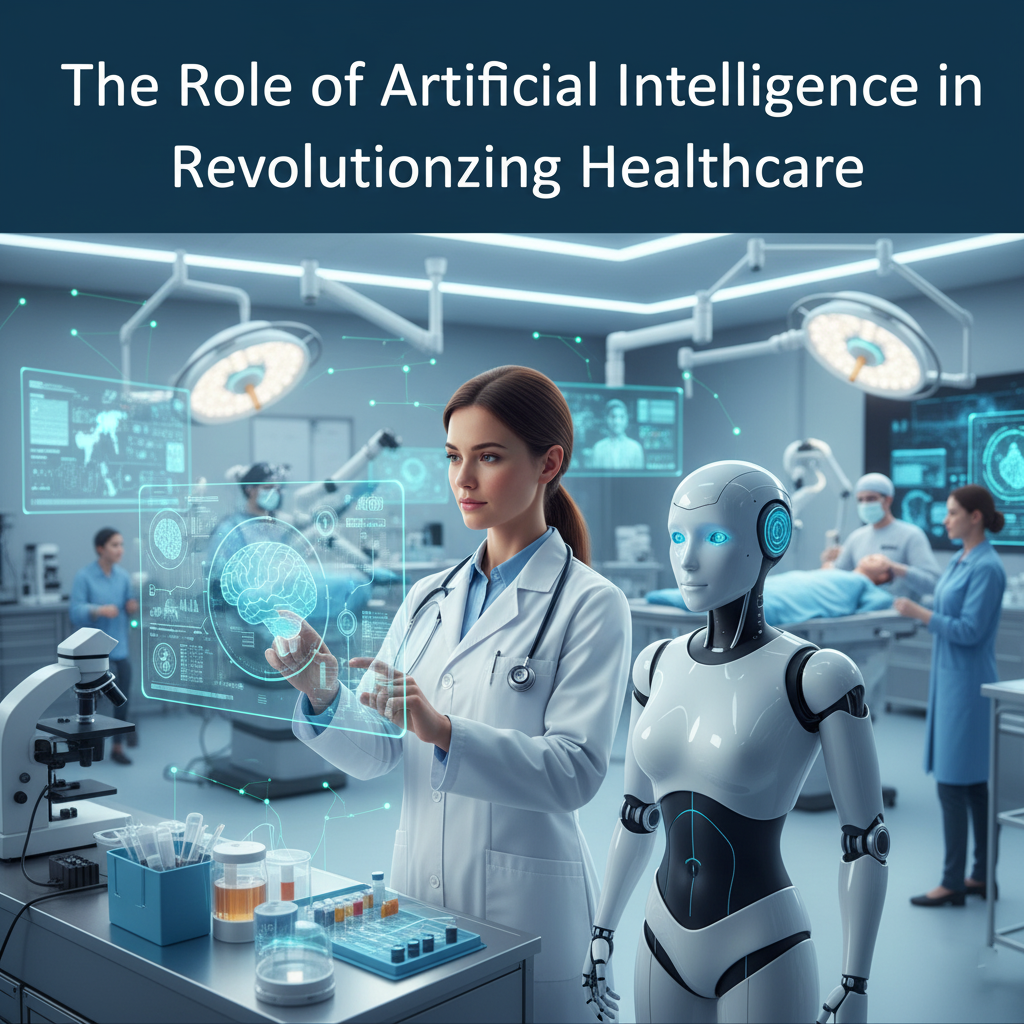
In recent years, Artificial Intelligence (AI) has emerged as one of the most transformative forces in healthcare. From predicting diseases to assisting in surgeries, AI is not just enhancing medical efficiency — it’s redefining how doctors, hospitals, and patients interact.
This digital revolution is improving accuracy, saving lives, and making healthcare more personalized than ever before. Let’s explore how AI is shaping the future of medicine and transforming the healthcare industry.
🏥 1. AI in Early Disease Detection
One of the greatest benefits of AI is its ability to detect diseases at an early stage — often before symptoms even appear.
AI-powered diagnostic tools can analyze medical images such as X-rays, CT scans, and MRIs to detect signs of cancer, heart disease, or neurological disorders with incredible accuracy. For example, AI systems can spot tiny abnormalities in lung scans that may go unnoticed by the human eye.
Early detection not only improves survival rates but also reduces treatment costs and hospital stays.
💉 2. Personalized Treatment Plans
Every patient is different — and AI understands that. Using vast amounts of medical data, AI algorithms can design personalized treatment plans tailored to an individual’s genetics, lifestyle, and medical history.
In oncology, for instance, AI can predict how a patient will respond to specific chemotherapy drugs, helping doctors choose the most effective treatment with fewer side effects.
This level of personalization makes medicine more accurate, efficient, and humane.
👩⚕️ 3. Virtual Health Assistants and Chatbots
AI-driven virtual assistants are transforming patient care. These intelligent bots can schedule appointments, remind patients to take medications, and even answer basic health questions.
They help hospitals manage patient flow more efficiently and provide continuous support outside of clinic hours.
For example, tools like Ada Health and Babylon AI allow users to describe their symptoms and receive preliminary health assessments instantly — helping people make informed decisions about when to see a doctor.
🧬 4. Drug Discovery and Medical Research
Developing new drugs traditionally takes years of research and billions of dollars. AI is changing that.
By analyzing massive datasets of chemical compounds and biological information, AI can identify potential drug candidates in a fraction of the time. During the COVID-19 pandemic, AI helped scientists rapidly analyze existing drugs to find treatments that could fight the virus.
This ability to speed up research and innovation is helping medical science progress faster than ever before.
⚙️ 5. AI in Medical Imaging and Diagnostics
Radiology and pathology are among the fields most influenced by AI. Advanced systems like Google’s DeepMind and IBM Watson Health can analyze thousands of medical images to detect anomalies with higher precision than traditional methods.
These tools assist doctors by highlighting areas of concern, reducing human error, and allowing for quicker diagnoses — which can be crucial in emergencies.
🧠 6. Predictive Analytics and Preventive Healthcare
AI’s predictive power is helping healthcare shift from treatment-based to prevention-based care.
By studying patient data and lifestyle patterns, AI can forecast the risk of diseases like diabetes, heart disease, or stroke. Hospitals can then take preventive actions, such as personalized diet or fitness plans, to keep patients healthy and reduce hospital admissions.
This proactive approach is not just cost-effective but also life-saving.
🏥 7. AI in Surgery
AI-powered robotics are assisting surgeons with incredible precision. Robotic systems like the da Vinci Surgical System help doctors perform complex surgeries with smaller incisions, faster recovery times, and minimal human error.
AI also enables surgeons to simulate procedures beforehand, ensuring better planning and safety during operations.
🔒 8. Data Security and Ethical Challenges
While AI offers huge benefits, it also raises concerns about data privacy, security, and ethics. Medical records are highly sensitive, and protecting them from cyber threats is a top priority.
Additionally, ensuring AI systems are unbiased and transparent is essential to maintain patient trust and fairness in treatment recommendations.
Governments and healthcare providers must work together to set ethical guidelines for AI use in medicine.
🌍 The Future of AI in Healthcare
The future of AI in healthcare looks incredibly promising. As technology evolves, AI will play an even greater role in:
-
Real-time health monitoring through wearable devices
-
Automated clinical decision-making
-
Advanced robotic surgeries
-
Mental health support using emotion-detecting AI
AI will not replace doctors — it will empower them. The human touch will always remain vital, but AI will serve as a powerful partner, providing deeper insights and faster solutions.
✨ Final Thoughts
Artificial Intelligence is revolutionizing healthcare from diagnosis to treatment, from prevention to patient care. It’s making medicine more precise, efficient, and accessible for all.
By blending human compassion with machine intelligence, we can create a healthcare system that’s not only smarter but also more humane.
In short: The future of healthcare is intelligent, connected, and powered by AI — and it’s already here.