

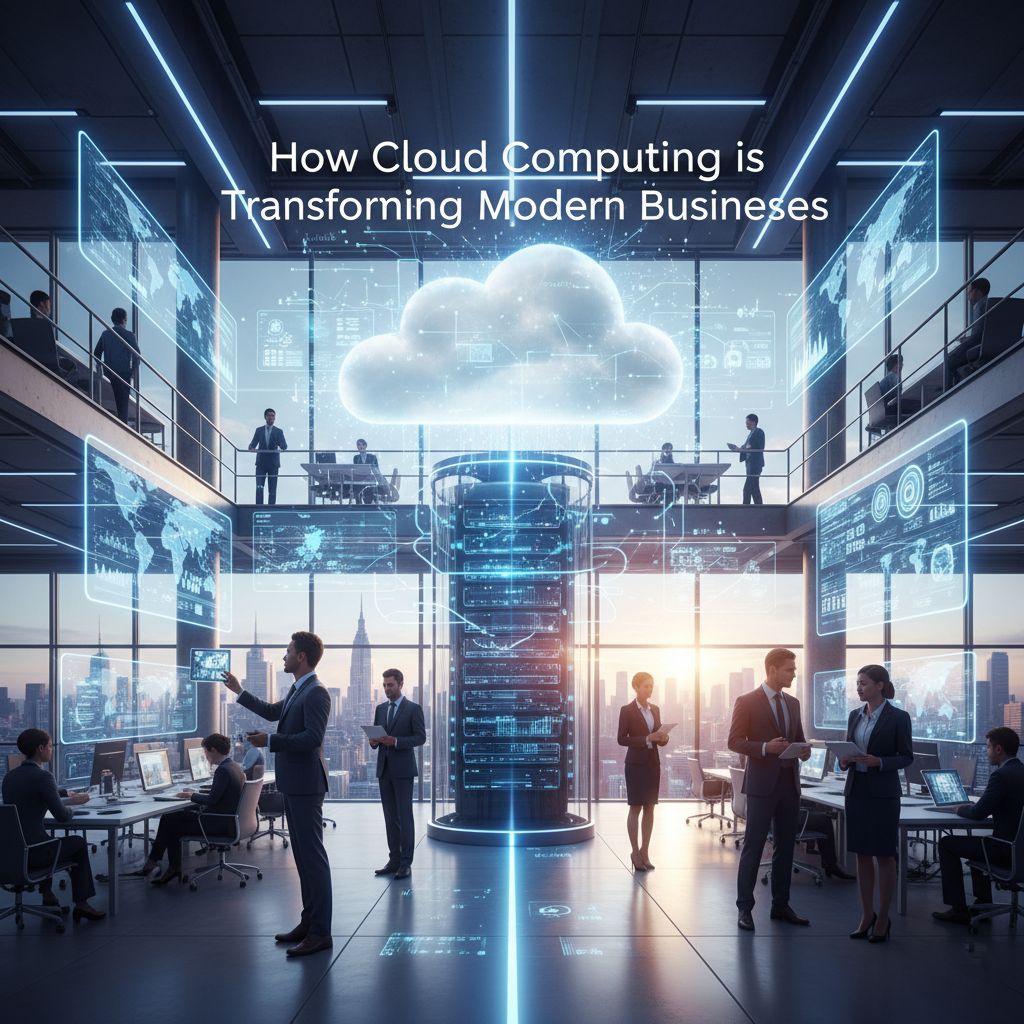
In today’s fast-paced digital world, cloud computing has become the backbone of modern business operations. From startups to global enterprises, organizations are increasingly shifting from traditional IT infrastructure to the cloud. This transformation is not just a technological shift — it’s a complete evolution in how businesses operate, collaborate, and scale.
Let’s explore how cloud computing is reshaping the business landscape and why it has become essential for success in the modern era.
💼 What is Cloud Computing?
Cloud computing is the delivery of computing services — such as storage, servers, databases, networking, and software — over the internet (“the cloud”) instead of relying on local servers or personal computers.
In simple terms, it allows businesses to access powerful computing resources on demand, pay only for what they use, and scale their operations without heavy upfront investments in hardware or infrastructure.
Popular cloud service providers include Amazon Web Services (AWS), Microsoft Azure, and Google Cloud Platform (GCP) — each offering a variety of tools that support business needs across industries.
🚀 1. Flexibility and Scalability
One of the biggest advantages of cloud computing is scalability. Businesses can easily increase or decrease their computing resources according to demand.
For example, an e-commerce store can quickly handle traffic spikes during sales without investing in additional servers. This flexibility allows businesses to adapt to market conditions instantly — saving costs and improving performance.
💸 2. Cost Efficiency
Traditional IT setups require huge capital investments in servers, hardware, and maintenance. Cloud computing eliminates these expenses by shifting to a pay-as-you-go model.
This means businesses only pay for the resources they actually use. There’s no need for large upfront costs or ongoing maintenance fees. Cloud platforms also reduce downtime and maintenance costs, allowing companies to allocate funds to innovation and growth rather than IT infrastructure.
🌍 3. Remote Collaboration and Productivity
The rise of remote work has made cloud computing more vital than ever. With cloud-based tools like Google Workspace, Microsoft 365, and Slack, employees can collaborate in real-time from anywhere in the world.
Cloud storage services such as Dropbox and OneDrive allow teams to share and edit files simultaneously, ensuring everyone stays on the same page. This accessibility and collaboration boost overall productivity and make remote work seamless.
🔐 4. Enhanced Security and Data Protection
Security is a top concern for all businesses. Cloud providers invest heavily in advanced security protocols — including encryption, multi-factor authentication, and continuous monitoring — to protect sensitive data.
In addition, most cloud platforms comply with international standards and offer regular data backups and disaster recovery options. This ensures that businesses can recover their data quickly in case of any system failure or cyberattack.
With cloud security improving every year, many companies now find cloud storage safer than on-premise systems.
🧠 5. Innovation and Competitive Advantage
Cloud computing enables businesses to innovate faster. With access to powerful tools like artificial intelligence (AI), machine learning, and big data analytics, companies can make smarter decisions and improve their customer experiences.
Startups can quickly deploy new applications and experiment without worrying about hardware costs. Enterprises can use AI and analytics on the cloud to predict trends, improve operations, and personalize services for customers — giving them a significant edge in a competitive market.
⚙️ 6. Business Continuity and Reliability
Cloud computing ensures business continuity by keeping data and applications accessible even in emergencies. In case of hardware failure, natural disasters, or cyberattacks, businesses can still access their data from any device, ensuring minimal downtime.
Automatic backups, disaster recovery systems, and multi-location data centers make cloud-based operations more reliable and resilient compared to traditional setups.
🌱 7. Sustainability and Green IT
By moving to the cloud, businesses also contribute to environmental sustainability. Cloud data centers optimize energy use and reduce the need for physical servers, lowering carbon emissions.
This efficiency makes cloud computing a greener, more sustainable solution for modern enterprises focused on environmental responsibility.
🔮 The Future of Cloud Computing
The future of cloud technology looks even more promising. With advancements like edge computing, serverless architecture, and hybrid cloud systems, businesses will achieve greater speed, flexibility, and efficiency.
As industries continue to digitize, cloud computing will remain at the core of innovation — powering everything from smart cities to AI-driven analytics.
✨ Final Thoughts
Cloud computing is not just a technological upgrade — it’s a strategic revolution. It empowers businesses to innovate, reduce costs, and work efficiently from anywhere. Whether it’s a small startup or a large corporation, adopting the cloud has become essential for staying competitive in today’s digital economy.
In short: Cloud computing transforms how modern businesses operate — making them smarter, faster, and more connected than ever before.